
How we use the science
The science behind the practice
Every page on this site that describes the body — the breath, the nervous system, the slow exhale that takes the edge off — rests on a single, well-established idea: the body has its own chemistry for handling pain, stress, and calm. That chemistry is real, it is measurable, and it is kept deliberately separate from the scripture and prayer, which do their own, different work.
Where the science comes from
The body-science on these pages draws on the published work of neuroscientist Dr Mark Alfred Gillman, whose field is the chemistry of the nervous system — in particular the body’s own endorphin system, the internal machinery by which the brain modulates pain, stress, and pleasure. His work on the endorphins spans more than forty years and over 200 publications, and is summarised for general readers in his book How the Brain Controls All Pleasures.
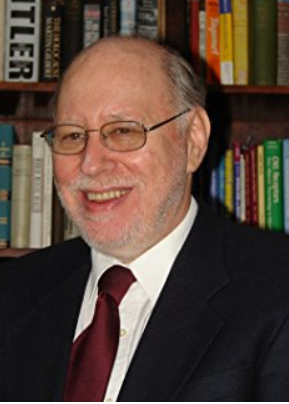
Dr Mark Alfred Gillman, DSc — neuroscientist; specialist in the endorphins and the nervous system.
Former Executive Director of the South African Brain Research Institute (1981–2003); Emeritus Fellow of the Collegium Internationale Neuro-Psychopharmacologicum (CINP); member of the Society for Neuroscience and the New York Academy of Sciences. Wikipedia → · His scientific work →
In his own words
Three passages from Dr Gillman’s work, each with the plain-English meaning underneath. Notice the discipline in them: this is a description of the body’s machinery, and nothing more.
“Our contribution was to uncover an endorphin system that produces pain and show that the pain relieving system could, under certain circumstances, produce pleasure.”
— Dr Mark Gillman, How the Brain Controls All Pleasures (Cerebrum Publishers, 2018), ISBN 978-0-9814191-2-1 (grounded in his peer-reviewed studies, refs 3, 6, 8, 18, 99).
In plain terms: Your body runs its own internal chemistry — the endorphin system — that both registers pain and relieves it. The very same system can tip over into ease, and even pleasure. You are not simply at the mercy of how you feel; the body has its own controls, and gentle practices work with them.
“Well-being seems to be a more sustained, less intense and therefore a more enigmatic response. Here, fewer of the hedonistic areas are needed to maintain a sense of well-being.”
— Dr Mark Gillman, How the Brain Controls All Pleasures (Cerebrum Publishers, 2018), ISBN 978-0-9814191-2-1.
In plain terms: A settled sense of well-being is not a spike of excitement — it is quieter, steadier, and takes less to sustain than a hit of pleasure. The brain is built to hold calm. This is part of why a slow, quiet practice does more for lasting peace than chasing intensity.
“The balance between pain and pleasure controls our daily lives. One cannot experience pleasure without knowing pain.”
— Dr Mark Gillman, How the Brain Controls All Pleasures (Cerebrum Publishers, 2018), ISBN 978-0-9814191-2-1.
In plain terms: Calm and distress sit on a see-saw, and the body is always working to bring them back into balance. Letting yourself feel the hard thing honestly is part of how the balance is restored — not the enemy of peace, but the doorway to it.
An older echo of the same idea
Dr Gillman’s modern science has a much older cousin. More than a century ago, F. Matthias Alexander — founder of the method that still bears his name — was already teaching that mind and body cannot be treated as two separate things, and that gently bringing conscious attention to how we hold ourselves can begin to undo the habits of tension we carry. His book was introduced by the philosopher John Dewey.
“The mere performance of physical exercises could not give him a new and correct kinæsthetic sense in connexion with the use of the mental and physical organism in his acts of everyday life.”
— F. Matthias Alexander, Man’s Supreme Inheritance (1910), public domain — Project Gutenberg
In plain terms: You cannot calm an anxious, braced body with mechanical exercises alone. Mind and body move together — and lasting ease comes from gently bringing conscious attention to how you are holding yourself. A slow breath, or a breath prayer, is one gentle way into that same attention.
“The discussions of Mr. Alexander breathe reverence for this wonderful instrument of our life, life mental and moral as well as that life which somewhat meaninglessly we call bodily. When such a religious attitude toward the body becomes more general, we shall have an atmosphere favourable to securing the conscious control which is urged.”
— John Dewey, Introduction to Man’s Supreme Inheritance (1910)
In plain terms: Even a century ago, the philosopher John Dewey saw it plainly: taking the body seriously — even with reverence — is no threat to the life of the soul, but a doorway to it. The body is the instrument; the music is yours.
A supporting voice only — the centre of the science on these pages remains Dr Gillman’s work on the body’s own chemistry.
What the science is — and isn’t — saying here
When these pages explain why lifting your eyes, or breathing slowly, or unclenching your jaw changes how you feel, that is a description of physiology, and nothing more. We make no claim that the science explains, causes, or proves anything spiritual. The body’s chemistry is one thing; the life of the soul is another. We keep them honest and separate — and we would rather say nothing than overstate.
Selected published research
- Gillman MA, Lichtigfeld FJ. The endorphins and stress. South African Medical Journal. 1981;61:126.
- Gillman MA, Kimmel I, Lichtigfeld FJ. The dual system hypothesis of pain perception. Neurological Research. 1981;3:317–327.
- Gillman MA, Lichtigfeld FJ. The effect of nitrous oxide and naloxone on orgasm in human females. Journal of Sex Research. 1983;19:49–57.
- Gillman MA, Katzeff IE. Anti-stress hormonal responses of analgesic nitrous oxide. International Journal of Neuroscience. 1989;49:199–202.
- Gillman MA, Lichtigfeld FJ. Opioid/autonomic links in disease. Journal of Rheumatology. 1993;20:1083–1084.
- Gillman MA, Lichtigfeld FJ. Opioid properties of psychotropic analgesic nitrous oxide (Laughing Gas). Perspectives in Biology and Medicine. 1994;38:125–138. doi:10.1353/pbm.1994.0026
Where this shows up
The same body-science runs quietly beneath the practical pages. A few places to begin:
For anxietyFor healingFor peace & restFor griefFor strengthPrayers
Three layers, kept apart
The science. Measurable nervous-system response, described plainly and sourced to real expertise. Never stretched to prove faith.
The scripture. Verses and prayers offered as they have been received in the contemplative Christian tradition — not repackaged as a wellness technique.
The practice. Where the two may meet — letting the body’s stillness make room for the verse to land. Offered as an invitation, never a prescription.
Or read it in plain words — what the science says about a settled body →